Mung Summer and Kharif are a major Dahani harvest ripening at a short time of both seasons. It is mainly used for lentil which contains 24-26% protein, 55-60% carbohydrates and 1.3% of fat. Due to the denial harvest, it is found to be cultivated in its roots that increase the stabilization in the soil of the aeration (38-40 kg per hectare) and 1.5ton of organic matter in the form of roots and leaves after harvesting from the crop farm, which maintains organic carbon in the land and increases the power of the earth. It can be easily placed in a multifaceted cycle due to its ripening at a short time. It works of green manure by pressing the soil in the soil by plunging the soil into the farm after the plunging of the beans from the mung crop. Cultivation of mung also leads to the strength of the soil.
Mung can be easily grown in three seasons of Kharif, Rabi and Jayad. In North India, it grows in rain and summer seasons. Moung grows in the Rabi season in southern India. More rains are harmful for this crop. The terrain, where rains from 60 to 75 centimeters annually, are Monasib for cultivation of corals. Moung harvest requires warm climate.
This can be cultivated from the sea level to a height of 2000 meters. Dry weather and elevated temperatures are very beneficial when planting legumes and legumes on plants.
Soil Mung is a lentil crop that is prepared in a short time. It can be easily cultivated in both irrigation and irrigation rocks. This has been considered to be well-drained Balui Doamt ground for successfully cultivation. North India has good drainage Domt Matiyar Mudiyar and Red Soil Monasib for Southern India.
Farm Preparation: After the rain starts, 2 to 3 times of cultivator or native pilgrimage should be collected from 2 to 3 times in the field and make the farm equal. Weeds and old harvests should be removed from the farm. At the time of the last tillage, gober or compost manure should be found in the soil at the rate of 50 quintal per hectare. Chloropyrifus 15 per cent powder for protecting the term will be beneficial to mix in the soil at the time of preparing the farm at the rate of 20 kg per hectare.
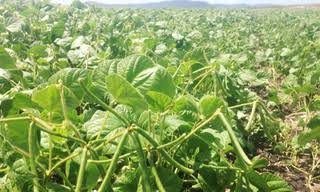
Selection of mung species The choice of high species will lead to the production in every recent way. According to the season Monasib Species were given below?
For Rabi Season: Type 1, Pant Mung 3, HUM 16, Listen and Jawahar Mung 70.
For Kharif Season: Pusa Giant, Malaviya Jyoti, ML5, Jawahar Mung 45, Amrit, PDM 11 and Type 51.
Rabi and Kharif both seasons
For : Type 44, PS16, Pant Mung 1, Pusa Giant, K851 and Shalimar Mung 2.
Seed quantity: It will be beneficial to put 12 to 15 kg of seeds per hectare in the Kharif season and should be at a distance of 30 to 40 cm in the boi queues. Seed rate for mung in rabi and incandescent season should be 20 kg per hectare and should be 20 to 25 cm in boi queues.
Manure & Fertilizer: Mung is a lentil crop, so it doesn’t need much nitrogen in it, yet it would be beneficial to give the amount of 20 kg of nitrogen, 50 kg of phosphorus and 20 kg of potash at the rate of buoy. The odorant fertilizer in odor-deficiency rocks should be given in accordance with 20 kg per hectare. The entire amount of all four types of fertilizers should be given before the BOI or at the time of the BOI. If possible, 1 time in every third year, 10 to 15 quintets should be well cultivated Gober’s compost at the time of the last tillage of the farm.
Irrigation & Water Exhaust: In the Kharif, the coral crop does not need irrigation, but irrigation in the event of flowering is significantly enhanced in yield. It is important to remove water from the farm in case of more rain. Avoiding water leads to ignition disease, which leads to heavy damage to the crop. Water is much needed than kharif in the mung crop in summer. 4 to 6 irrigation should be done on the difference of 10 to 15 days in the summer season. The difference of irrigation should be 8 to 10 days when overheated.
Niraigudai and Weed Control: After 15 to 20 days of the BOI, the first and 40 to 45 days should be denied. Spray the grass and wide leaf weeds in the field before sowing in a water of 800 to 1000 liters of fluchlorylin 45 EC to eliminate by chemical method. After sowing seeds, spray the 3.3 liter of pendimethylene 30 EC at a rate of 800 to 1000 liters of water.
Time & Way of BOI: The sown of the nutmeg should be done only in February where irrigation is facilitated. When Mung’s BOI Monsoon arrives in the Kharif season, one should do between June’s second pakhawade before July. Moung is cultivated in the summer season in Uttar Pradesh, Punjab, Haryana, Delhi, Bihar and West Bengal. In these states, Mungs sown after harvesting wheat, potato etc. Mung’s BOI should do in queues. 2 The distance between the queues should be 30 to 45 centimeters. Seeds should be sown at a depth of 4 to 5 cm. Mung Seeds
The first carbendas should be sowed only after the treatment from the gym.
Mung's Special Worms
Black Lacquer Months: In the event of pods from the new plant, this pest is found on the baby and the leaves of adult plants. They suck the juice from soft twigs, flowers and raw beans of the spring crop.
Prevention Use a yellow sticky trap when the menstrual outbreak, so that the menstrual trap is glued. Preserving the Perspective Caccyennelids or Syphids or Crysoparla Carnea with 50000-100000 eggs or snodices at the rate of per hectare. Warning: Parameter 2 to qtranxf_postsFilter() expected to be a reference, value given in /home/webplayg/public_html/vayanjan.com/wp-includes/class-wp-hook.php on line 286 BT should be sprayed at a rate of 1 kg per hectare. Despite this, do not contain metasystax 25 EC or dimethoate 30 EC or imidacloprid 17.8 SL or thiomax 25 EC 1 millimeter per litre of water.
Green Food: Take from the early intoxication of the crop and suck the juice of this infant and adult attack until the leaves and legumes of the plants. Patient Plants
Increased normalization is significantly reduced.
Prevention: Alkali crop should be cultivated rather than mixed. One of the most length crops such as sugarcane, tide and sunflower and so on should be planted in a ratio of 6:1 or 6:2 with mung. This leads to a great control over the number of insects such as green odka, prefering light. If there is no prevention even after this, spray the metasystax 25 EC or dimethoate 30 EC or imidacloprid 17.8 SL or thiomaxum 25 EC 1 ml per liter of water.
White Fly: This pest is harmed in many ways to crop. It sucks juice from plants and leaves secreted honey on the leaves. Disposing and spreading of black powdery mildew (shoe mold) on the fluid leads to a blockage in the action of photosynthesis and the viruses of yellow chicobra disease (yellow mozack) spread rapidly. The patient is completely roasted.
Prevention: Seedling should be done at a rate of 8.0 ml per kilogram of seed from dimethoate 30 EC insecticide chemicals 24 hours before sowing to protect against white fly. It is more advantageous to cultivate mixed instead of pure crop. Applying from 6:1 or 6:2 ratio along with corals to any 1 of the most lengthy crops such as sugarcane, tide and sunflower and so on to a great extent control over the number of insects like white fly.
Methyl Demethan (Metastox) of 25 EC for the prevention of white fly dispersing viruses of yellow molec disease Spraying as per need of 625 ml or Malathyan 50 EC or dimethoate 30 EC at a rate of 1 liter per hectare
Must.
Thrips Thrips of pests attack on soft buds in warmth in the area of the flower on the mung crop. They cause great damage to flowers.
There is an outbreak of thrips pests on coral beans and they do not develop rashes. Thrips in all juice suck pests are more harmful than all.
Prevention :Dimethoate should be sprayed at a rate of 700 ml per hectare of 30 EC or Malathian 50 EC before blooming the flower to prevent thrips or 700 ml of metasystax 25 EC.
Blue Butterfly The puppy of this intoxication of flowers and pods is soft buds and flowers
attack. These beans make holes
Do not penetrate the tissue inside
Accounts. Developed inside these legumes
Disadvantages of donations especially
Send
Prevention For the prevention of pod beadhi blue butterfly, the powder of nibulli (dry neem seeds) should be sprayed with a solution (5.0 per cent) in water. If the number of beaded butterfly is significantly higher, the Malathian 50 EC should be sprayed at a rate of 1.0 liters per hectare in the initial stage of becoming a pod.
Special Diseases of Mung
Yellow Chiteary Disease (Yellow Mozek): Yellow Chiteary Disease of Mung is a dangerous disease caused by the virus. The virus spreads from the seeds and touches. The yellow chitary disease spreads by white fly (Bemisia Tabassai) which is a juice sucking insect. Plants affected by the disease thrive late. Flowers and legumes in these plants look much less than healthy plants.
Prevention : Select anti-disease and advanced species SML668 for BOI, Narendra Mung 1, PDM11, PDM84-139(symmetrical), PDM84-143(satis), PDM54(moti), Meha, Pusa Giant, HUM16 etc. For the prevention of white fly, spray of metasystax or malathian or damethoate or monochromophos (0.04 percent).
Wrinkle Leaf Disease (Lif Crinkle) : This disease occurs by ‘Urden Bean Leaf Krinkle virus’. The dispersion of the disease occurs from plant juices (saps) and seeds. It also spreads by vines and other pests in the field. With this virus infection, pollen particles in flower buds are stalked, from which the patients find less legumes in plants.
Patient plants remain green even till harvest time. With this disease, the plants can also be infected with yellow chitary disease.
Prevention : To select anti-gynecology and advanced species for BOI. For the prevention of white fly, spray of metasystax or Malathian or Damethoate or Monochromophes (0.04 percent) on the crop.
Sarcospora Letters Bundki Disease: It occurs by species called ‘Sercospora’. Symptoms of this disease appear as dark brown spots on the leaves. The outer part of the spots is brown. These spots also become on the branches and legumes of plants. These spots become large in a favorable environment. Patient leaves fall when flowering and legumes are formed. Fungi seeds and diseases that cause the disease survive in the land on the stools of the affected plants.
Prevention Seedlings before sowing should be treated at a rate of 2 g per kilogram of fungicidal carbadezhim or 2-5 g per kilogram.
The symptoms of the disease appear on the crop should be sprayed with a solution of carbendazole (0.1 per cent) or mancozeb (0.2 per cent).
Chronic mildew disease: This disease occurs by fungi called Irisify Polygonaceae. The disease spreads rapidly in warm and dry environments. White powdery spots appear on the leaves, stems and legumes of plants in this disease. These spots are later colored matmala. The leaves are dried before the completion of the disease. The pathogenic clistothesia survives the remains of plants.
Prevention The symptoms of the disease appear on the crop should be sprayed with a solution of 1 g of carbendazole or 1 g of sulfex 3 g of water per liter of water.
Cutting Crop harvesting depends on the variety of mungs. At the same time in the ripening species when the crop is cooked up to 80 per cent, take it out of the root or cut off. After that, dry the sun with a tractor or a wooden pole. After harvesting the harvest at the right time, store the wheat tax. Mung legumes look in bunches.
The whole crop is broken in 2 to 3 times. Usually some legumes in the harvest of Kharif continue to last
Yes. In such a condition, it is correct to break the pods.
Approximately 80 percent of the legumes can harvest the harvest. In the event of rain on the paved crop, the stems inside the legumes begin to germinate, while taking into account the lying season, is it right to break the harvest and legumes?
yield The average yield of mung is 8 to 10 quintals per hectare. On cultivating in new ways, this yield can be taken up to 15 quintals per hectare.
Source: Internet

