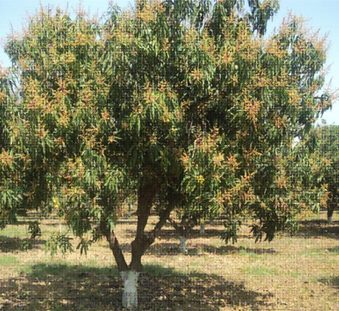
Most gardens in the state have been applied in an unscientific manner. By adopting a scientific method, the management of the planned way can be carried out in the fruit production of the common.
Land :-
Deep, sandy dome with good water holding capacity is considered the most suitable. The PH value of the land is considered to be suitable for its cultivation by 5.5-7.5.
Climate :-
The fruit with common tropical plants is yet it can be successfully produced in the subtropical region. It is considered suitable for its cultivation up to 25-27v temperatures. During monsoon there are 125 cm rainfall that is suitable for it.
Suitable varieties of mango and their details:
Name of Kishma Plant
Total Forests Gram
Pulp Pattern
Latest News
Production kelo per
Special Properties
English
200-300
73.75
23.5
40
Suitable for regular fruiting greens
Dashgar
150-200
76.75
24.6
80
Best taste, small kernels
Lungada
200-250
76.75
22.5
75
Filamentless pulp Small kernels
beautiful
300-350
75.95
22.5
65
Beading fragrance-min
Mallika
200-350
72.20
22.20
65
Regular fruiting
How to prepare a plant:-
The new methods of vegetative transmission such as the offering pens are the Chashma Chadhana Venier pen, etc. Vinier Grafting is an easy and low cost method of preparing common plants at the trading level. The method is to cut out the crunch out of the maternal plant in the nursery and tie a new plant on the seed plants engaged in the nursery; the tree is prepared. After a few days, when the stalk falls, and the top buds are over, these twigs should be used to bind the pen. Use 1 year old sporad plant as original.
Planting Plants:-
10 of common plants*Planted at a distance of 10 m, but in dense gardening, plant it at a distance of 2.5 to 4 m. 1 for planting plants*1*1 m of digestions. In the month of June 20-30 kg of vermicumpost 2 kg of Neem Khali 1 kg of bone sawdust or single super phosphate and 100 g of metets (for term) 10 g should be well filled with the soil of the above surface of the farm.
Plant Viewing: -
The care of the mango plant is indispensable for its proper fruiting and complete production. After planting the plant until the plant is installed completely, water should continue. For the two three years of introduction, mango plants have an intentive care. Irrigation should be managed to protect the jaws from frost and to protect the heat from lu. Branches from the ground to 80 cm should be removed.
Nutrition of fruit trees:-
Manure and fertilizer in common plants should be given as follows:
Year
Manure of Gober (kg)
Urea (g)
Single Super Phosphate (gram)
Murate of Potash (gram)
1.3
2.5
200
150
150
4.10
10.00
900
800
600
10 years after
75.00
2000
1500
800
Irrigation:-
Small plants of mankind should be irrigation in the summer at an interval of 4-7 days and in the cold with an interval of 10-12 days. But the fruit trees should not be irrigation from October to January as if the soil is high after October, the fruits are low, and the new branches are high.
Supplementary Plants and Infusions:-
It takes 10-12 years to fully prepare the mango tree, in an early 3-4 years when the trees remain small, in an empty place, in the Kharif, a common crop can be obtained from fresh, mung, lobiya, peas in Rabi, chana, lentil or franbain in the summer and in the summer, with additional income from intractable crops, as well as the fertility of the land.
Chronicles of Old Fruit Trees:-
We know that the life span of the mango plant is 50 years or even more. In the mango plant, as it is old, it begins to digest in its main stem, and the branches are found in themselves, the stem becomes very dense. The water of the barish in such plants of the man is filled in hollow place. The problem arises from rotting and melting, the plants are weakened and broken down into a little air. First of all the unproductive branches should be removed for treatment in 100 kg of good cooked gober manure and 2.5 kg of neem per plant. To increase the branches in the next season.
Florence and Fruit:-
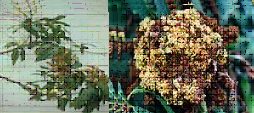
6-8 months old branches of mango bloom full-fledged flowers in February month
Common Cultivation
Pest & Disease Control:-
Pest Name
Characteristics
Control
Mango Hatper
Pest invasion in February March. For which the flower-fruit is rot and the fungal is created.
Spray a mL drug of quiinalafas in a liter of water.
Milbag
Pests are sucked by twigs and elders in February to make the flower fruit rot.
Take 200 g of dust per plant of chlorpyrifus.
Malfarm
The leaves of plants wear a voluminous form and the number of male flowers in the flower is spoiled.
Two mL by cutting the affected flower Spray the naphthylene acetic acid 2 times from a 15-day difference.
Mango Malfarm (Bondage Disease) :-
The leaves of small plants in this disease are small and voluntarily formed and all the parts of the flores in large plants are thickened. The growth of the inflorescences decreases and the number of male flowers in it increases, the flowers of the inflorescences become large-sized and the inflorescences wear a voluminous form, the fruits are not formed and after some time the inflorescences are twisted.
Control
Destroy all the affected pushworms from 15 cm back and spray 2 M G Naphthylene acetic acid harmaen in October month from 2 to 3 times a 15-day interval and spray 0.05 per cent of Queenlaphas.
Income from common in one hectare area
10 in a hectare area * Planting in 10 meters requires 100 plants in which there is a possibility of income in accordance with the following conditions for planting seedlings.
Total expenses
S.No.
Work Details
English
Expenditure in Rs.
1.
Plantation
Fansing, pit excavator, manure and plant seedlings